Skiing is not just one sport. From carving groomed runs at a resort to climbing untouched backcountry slopes or launching off jumps in the terrain park, there are many types of skiing to explore. Here is a plain look at the main ski disciplines, how they differ and which one might suit you.
Types of Skiing at a Glance
| Type of Skiing | Where | Best For |
|---|---|---|
| Alpine (downhill) | Resort groomed runs | Beginners to experts |
| Freestyle | Terrain parks, halfpipes, moguls | Tricks and jumps |
| Freeride / off-piste | Ungroomed natural terrain | Advanced skiers |
| Backcountry / ski touring | Outside resort boundaries | Fit, experienced skiers |
| Cross-country (Nordic) | Flat and rolling trails | Fitness and endurance |
| Telemark | Resort or backcountry | Skiers seeking a new challenge |
| Ski racing | Gated race courses | Competitive skiers |
| Adaptive skiing | Resorts with adaptive programs | Skiers with disabilities |
1. Alpine Skiing (Downhill Skiing)
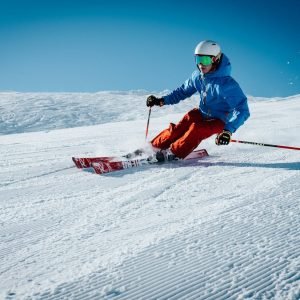
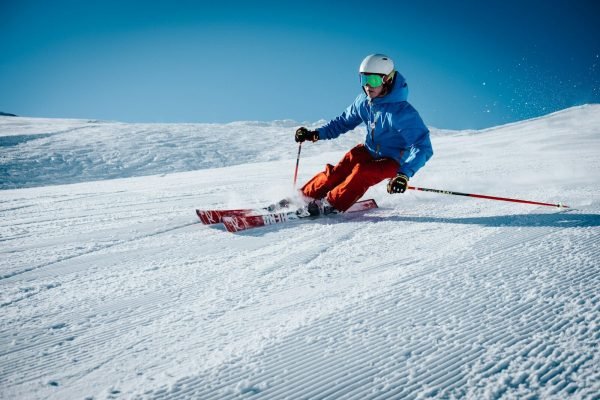
Alpine skiing is what most people picture when they think of skiing. You ride lifts up the mountain and ski down marked, groomed runs. Your heels are fixed to the skis, giving you strong control for turning and carving. It is the best starting point for almost everyone. Learn the basics in our how to ski guide.
2. Freestyle Skiing
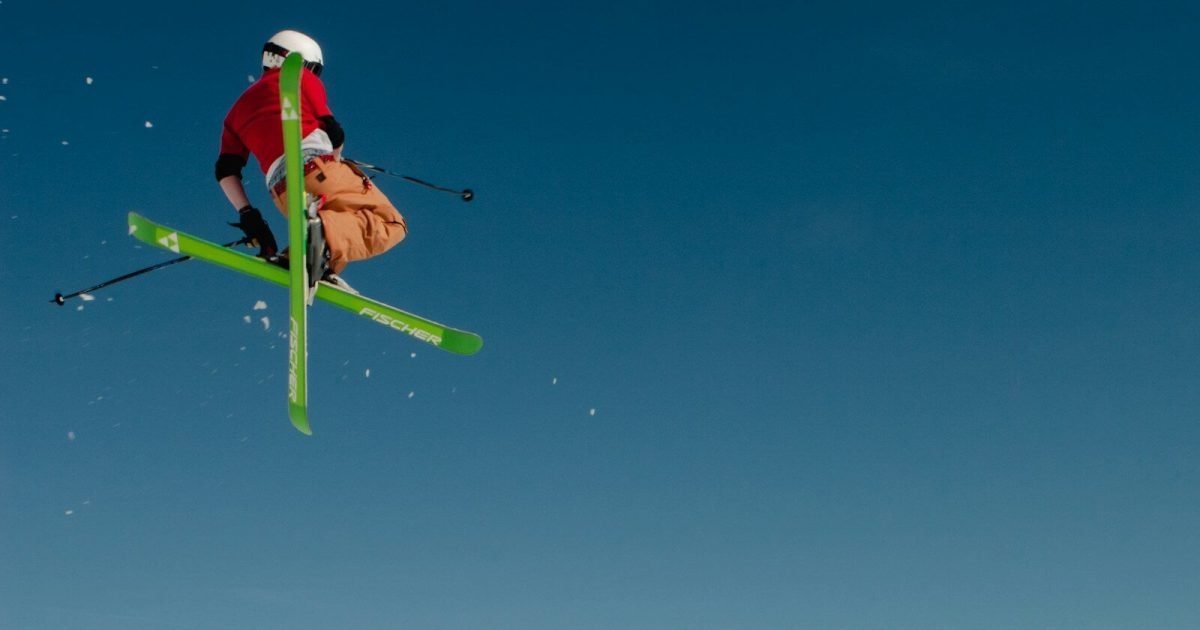
Freestyle skiing focuses on tricks, jumps and creative riding. It includes terrain park skiing on rails and boxes, halfpipe skiing, big air and slopestyle competitions. Mogul skiing, where skiers turn rapidly through bumps, and aerials, where athletes perform flips off ramps, are also freestyle disciplines. Freestyle skiers often use twin-tip skis, which have upturned tips and tails so they can ski and land backwards.
3. Freeride and Off-Piste Skiing
Freeride skiing means skiing natural, ungroomed terrain such as powder fields, trees, bowls and steep chutes. Some freeride terrain lies within resort boundaries, while off-piste areas can carry avalanche risk. Wider skis provide float in deep snow. Advanced skills, avalanche awareness and often a local guide are essential.
4. Backcountry Skiing and Ski Touring
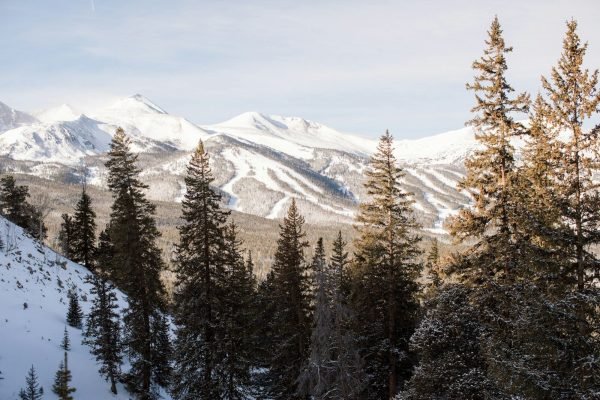
Backcountry skiing takes you beyond the resort, with no lifts and no ski patrol. Ski tourers use special bindings that free the heel for walking uphill and climbing skins attached to the ski bases for grip. At the top, they remove the skins, lock their heels and ski down. It combines fitness, adventure and solitude, but it requires avalanche training and safety equipment such as a transceiver, shovel and probe.
5. Cross-Country Skiing (Nordic)
Cross-country skiing uses long, narrow skis and free heels to travel across flat and rolling terrain on groomed trails. There are two main techniques: classic, a striding motion in set tracks, and skate skiing, which uses a skating motion. It is one of the best full-body workouts in the world and is popular in Scandinavia, Canada and the northern United States.
6. Telemark Skiing
Telemark skiing blends alpine and Nordic techniques. The heel is free, and skiers turn using a graceful lunging motion called the telemark turn. It takes strength and balance and has a passionate following in both resorts and the backcountry.
7. Ski Racing
Alpine ski racing includes several disciplines:
- Slalom: Tight, quick turns through closely spaced gates.
- Giant slalom: Wider turns and more speed.
- Super-G: Fast, flowing turns over longer courses.
- Downhill: The fastest discipline, with the fewest turns.
Many resorts offer recreational race courses where anyone can test their speed.
8. Adaptive Skiing
Adaptive skiing makes the sport accessible for people with physical or cognitive disabilities. Equipment such as sit-skis, outriggers and tethers, combined with trained instructors, allows almost anyone to enjoy the mountains. Many major resorts run dedicated adaptive programs.
Safety first: Off-piste and backcountry skiing carry avalanche risk. Always check local avalanche forecasts and never ski outside resort boundaries without training, equipment and an experienced partner or guide.
Which Type of Skiing Is Right for You?
- Complete beginner: Start with alpine skiing on groomed runs.
- Love jumps and tricks: Try freestyle in the terrain park.
- Chasing powder: Progress to freeride with a guide.
- Love hiking and adventure: Take an avalanche course and try ski touring.
- Fitness-focused: Cross-country skiing is a great workout.
Choosing Equipment for Each Type of Skiing
Each discipline uses slightly different gear. Alpine skiers use all-mountain or carving skis with fixed-heel bindings. Freestyle skiers prefer softer twin-tips. Freeride skiers choose wider skis for float in deep snow. Ski tourers need lightweight skis, touring bindings, climbing skins and boots with a walk mode. Cross-country skiers use long, narrow skis with light boots and bindings. When trying a new discipline, renting or demoing equipment is the best way to find out what you enjoy before you buy.
Common Questions
What is the most common type of skiing?
Alpine or downhill skiing at ski resorts is by far the most common type.
What is the difference between alpine and Nordic skiing?
Alpine skiing fixes the heel and focuses on downhill runs, while Nordic skiing frees the heel for traveling across flat and rolling terrain.
Is backcountry skiing dangerous?
It carries real risks, mainly avalanches. With proper training, equipment and decision-making, those risks can be managed.
New to all of this? Alpine skiing is the place to start, and our how to ski guide covers the first few days.