Knowing what to wear skiing can make or break your day on the mountain. What works is not one thick jacket but a few good layers that keep you warm, dry and comfortable as conditions change. Below we go through each piece, from base layers to gloves, plus a simple checklist you can use before every trip.
The Layering System Explained
Mountain weather changes quickly, and your body heats up when you ski and cools down on the chairlift. Layering lets you adapt. Every ski outfit follows the same three-layer system:
| Layer | Purpose | Best Materials |
|---|---|---|
| Base layer | Moves sweat away from your skin | Merino wool or synthetic |
| Mid layer | Traps body heat for warmth | Fleece, light down or synthetic insulation |
| Outer layer | Blocks wind, snow and water | Waterproof, breathable shell or insulated jacket |
1. Base Layer
Your base layer sits against your skin, so it should be snug and moisture-wicking. Merino wool is warm, soft and resists odor, while synthetic fabrics dry quickly and cost less. Wear a thermal top and thermal leggings. Avoid cotton, as it holds sweat and makes you cold.
2. Mid Layer
The mid layer provides warmth. A fleece or lightweight insulated jacket works well for most days. On very cold days, add a thicker fleece or a packable down jacket. On warm spring days, you may skip the mid layer altogether.
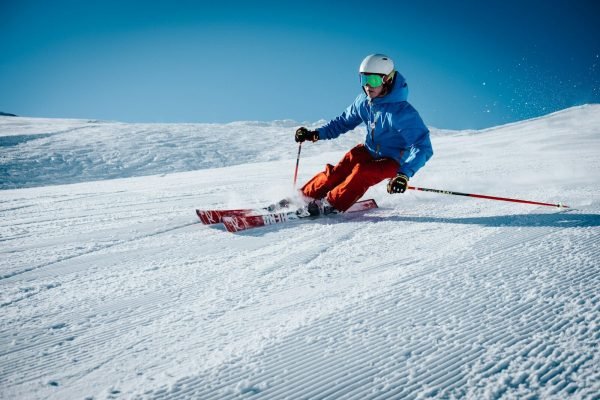
3. Ski Jacket and Ski Pants
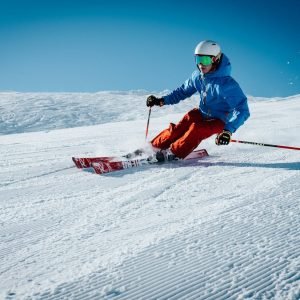
Your outer layer protects you from the elements. Look for a waterproof rating of at least 10,000 mm and good breathability. Useful features include:
- A helmet-compatible hood.
- A powder skirt to keep snow out when you fall.
- Pit zips for ventilation.
- A sleeve pocket for your lift pass.
- Ski pants or bib pants with built-in gaiters that fit over your boots.
Ski Socks
Wear one pair of thin to medium ski-specific socks. They should reach above the top of your ski boots. Thick or doubled socks reduce circulation and make your feet colder, not warmer. Merino ski socks are a great choice.
Gloves or Mittens
Waterproof, insulated gloves are a must. Mittens are warmer because your fingers share heat, making them ideal for people who get cold hands. Thin glove liners add extra warmth on very cold days.
Helmet and Goggles
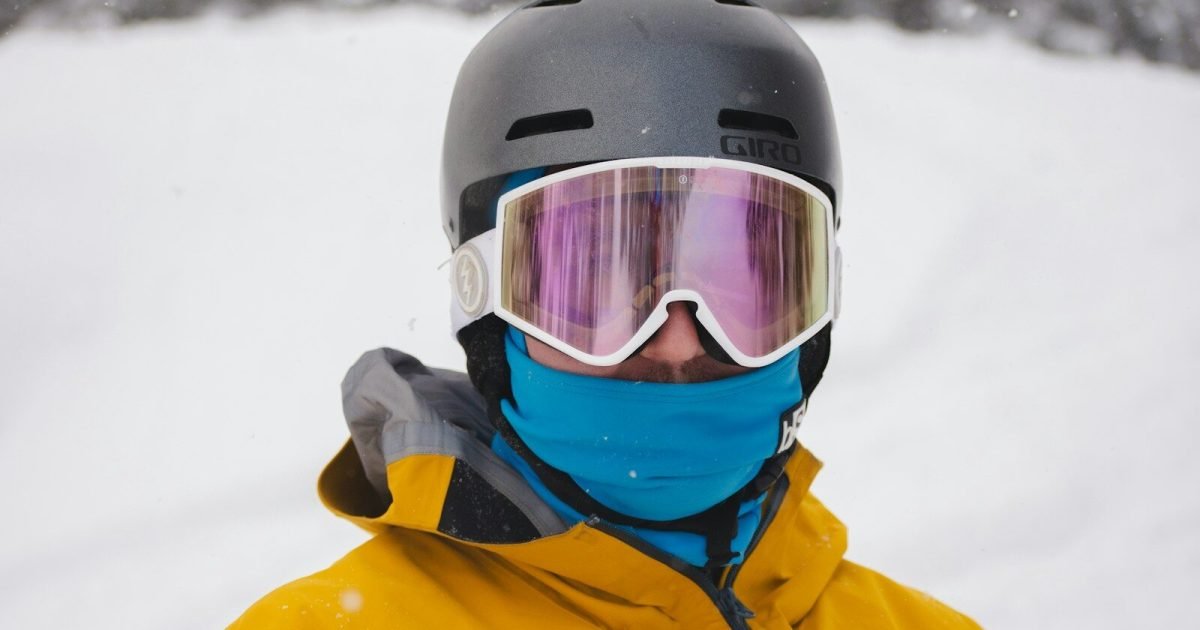
A ski helmet protects your head and keeps you warm. Make sure your goggles fit snugly with your helmet, with no gap between them. Choose goggle lenses for the conditions: darker lenses for bright sun and lighter, contrast-boosting lenses for flat light and snowfall.
Neck Gaiter or Balaclava
A neck gaiter or balaclava protects your face and neck from wind and cold. It is small but really helps on cold chairlift rides.
What to Wear Skiing Based on Temperature
| Conditions | Suggested Outfit |
|---|---|
| Very cold (below -10°C / 14°F) | Base layer, thick fleece or down, insulated jacket, mittens, balaclava |
| Cold (-10°C to 0°C / 14°F to 32°F) | Base layer, fleece, waterproof jacket, gloves, neck gaiter |
| Mild (0°C to 5°C / 32°F to 41°F) | Base layer, light fleece, shell jacket, lighter gloves |
| Spring (above 5°C / 41°F) | Light base layer, shell jacket, sunglasses option, sunscreen |
Don’t forget: Sunburn is common on the mountain, even on cloudy days. Snow reflects UV light, so wear sunscreen and lip balm with SPF.
What Not to Wear Skiing
- Cotton t-shirts, hoodies or jeans.
- Non-waterproof jackets or pants.
- Two pairs of socks.
- Loose scarves that can catch on lifts.
- Bulky jewelry.
Ski Outfit Checklist
- Thermal base layer top and bottoms
- Fleece or insulated mid layer
- Waterproof ski jacket
- Waterproof ski pants or bibs
- Ski socks (one pair, plus spares)
- Gloves or mittens
- Helmet and goggles
- Neck gaiter or balaclava
- Sunscreen and SPF lip balm
Should You Rent or Buy Ski Clothing?
Many resorts and outdoor shops rent ski jackets and pants, which is handy for a first trip. Base layers, socks and gloves are usually better bought, as they are personal items and affordable. If you plan to ski every year, buying a good waterproof jacket and pants pays off over time.
Dressing Kids for Skiing
Children get cold faster than adults, so layering is even more important. Dress kids in a thermal base layer, a fleece mid layer and a waterproof one-piece suit or jacket and bib pants. Mittens are warmer than gloves for small hands, and a well-fitting helmet with goggles is essential. Pack spare gloves and socks in case they get wet, and check regularly that they are warm and dry during breaks.
What to Wear Skiing: Common Questions
What should I wear skiing for the first time?
Wear a thermal base layer, a fleece mid layer, a waterproof ski jacket and pants, one pair of ski socks, gloves, a helmet and goggles.
Can I wear leggings under ski pants?
Yes, as long as they are thermal and moisture-wicking. Avoid cotton leggings.
Can I wear a normal winter coat skiing?
Only if it is waterproof and allows you to move freely. Most everyday coats are not designed for falls, snow and wind.
With your outfit sorted, our ski trip planning checklist covers the rest.