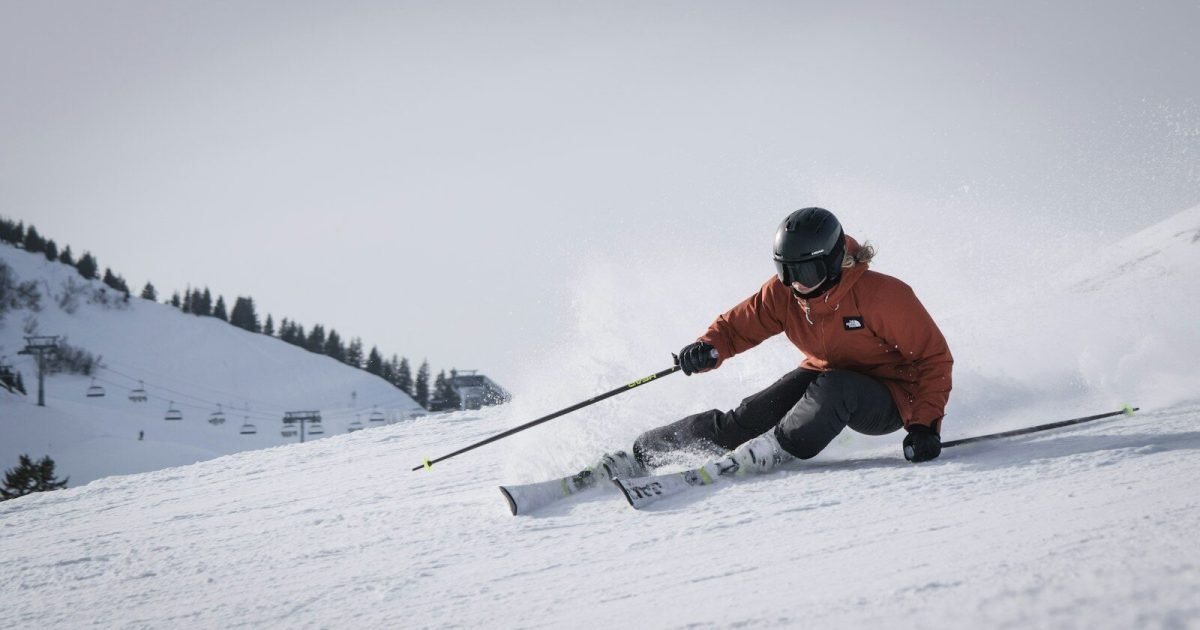
Learning how to ski is easier than most people think. With the right gear, a gentle slope and a few core techniques, most beginners can link their first turns within a day or two. Below we go through the first-day basics in order, from putting on ski boots to stopping safely and riding your first chairlift.
If you are still deciding which sport suits you, read our skiing vs snowboarding guide first.
What You Need Before Your First Ski Day
You do not need to buy expensive equipment to start skiing. Most beginners rent their skis, boots and poles at the resort or a local ski shop. What matters most is that everything fits properly.
- Ski boots: Snug around the heel and ankle, with toes just brushing the front when you stand straight.
- Skis: Beginners usually ride skis that reach somewhere between the chin and the nose. See our ski size chart for exact lengths.
- Helmet and goggles: A helmet is essential, and goggles protect your eyes from glare and wind.
- Warm, waterproof clothing: Base layer, mid layer and a waterproof jacket and pants. Our what to wear skiing guide covers this in detail.
Step 1: Get Comfortable in Your Ski Boots
Ski boots feel stiff and awkward at first. Walk around in them, flex your ankles forward and get used to leaning against the front of the boot. This forward pressure is the foundation of good skiing, so the sooner it feels natural, the better.
Step 2: Learn the Athletic Stance
On flat ground, click into your skis and practice your basic stance:
- Feet about hip-width apart.
- Knees and ankles slightly bent.
- Shins pressing gently into the front of your boots.
- Hands in front of you, as if holding a tray.
- Eyes looking ahead, not down at your skis.
This balanced, athletic stance keeps your weight centered over your skis and helps you react to changes in the snow.
Step 3: Walk, Glide and Side-Step
Before heading downhill, practice moving on the flat. Shuffle forward by sliding one ski at a time, then try small glides. To climb a gentle slope, stand sideways to the hill and take small side-steps, using the uphill edges of your skis to grip the snow.
Step 4: Master the Snowplow (Pizza)
The snowplow, often called “pizza” in ski schools, is the first way every beginner learns to control speed and stop. Point the tips of your skis together and push the tails apart to form a wedge shape.
- A small wedge lets you glide slowly.
- A wider wedge creates more friction and slows you down.
- Pressing evenly on the inside edges brings you to a stop.
Practice on a very gentle beginner slope until you can stop confidently whenever you want.
Step 5: Make Your First Turns
Turning is simply shifting your weight. While in a snowplow, press a little more on your right ski to turn left, and more on your left ski to turn right. Look where you want to go, and your body will follow. Link a few gentle turns together and you are officially skiing.
Step 6: Progress to Parallel Skiing
Once your snowplow turns feel easy, start bringing your skis closer together at the end of each turn. Over time the wedge disappears and your skis stay parallel throughout the turn. This usually comes after several days on snow, and a lesson with an instructor speeds it up a lot.
Beginner Ski Progression at a Glance
| Stage | Skill | Typical Time |
|---|---|---|
| Day 1 | Stance, gliding, snowplow stops | 2–4 hours |
| Day 1–2 | Snowplow turns on green runs | Half day to 1 day |
| Day 2–3 | Riding lifts, linking turns | 1–2 days |
| Week 1+ | Early parallel turns on easy blue runs | 3–7 days |
How to Ride a Chairlift
Chairlifts can feel intimidating, but they are simple once you know the routine. Hold your poles in one hand, watch the chair approach over your shoulder and sit down as it reaches you. Lower the safety bar once seated. As you near the top, raise the bar, keep your ski tips up, stand when your skis touch the ramp and glide away from the lift.
First-timer advice: Tell the lift operator it is your first time. They can slow the lift down to make getting on and off much easier.
Common Beginner Mistakes to Avoid
- Leaning back: It feels safer but makes your skis harder to control. Keep your weight forward.
- Looking at your skis: Look ahead to where you are going.
- Going too steep too soon: Stay on green runs until you can stop and turn every time.
- Skipping lessons: Even one or two lessons save days of frustration.
Should You Take Ski Lessons?
Yes, especially on your first trip. A qualified instructor will correct bad habits early, keep you safe and help you progress far faster than learning alone. Group lessons are affordable and a great way to meet other beginners. Many skiers who learn as adults say a two or three day lesson package was the best money they spent on their trip.
Common Questions About Learning to Ski
How long does it take to learn to ski?
Most people can stop and turn on easy green runs after one or two days. Comfortable parallel skiing on blue runs usually takes one to two weeks of skiing spread over a few trips.
Is skiing hard for adults to learn?
No. Adults learn well with good instruction and gentle terrain. Fitness helps, so check our ski fitness training guide before your trip.
Can I teach myself to ski?
You can, but it is slower and riskier. A lesson on your first day builds safe habits that make every later day more fun.
Once you can stop and turn with control, our ski size chart will help you choose the right skis for your next trip.